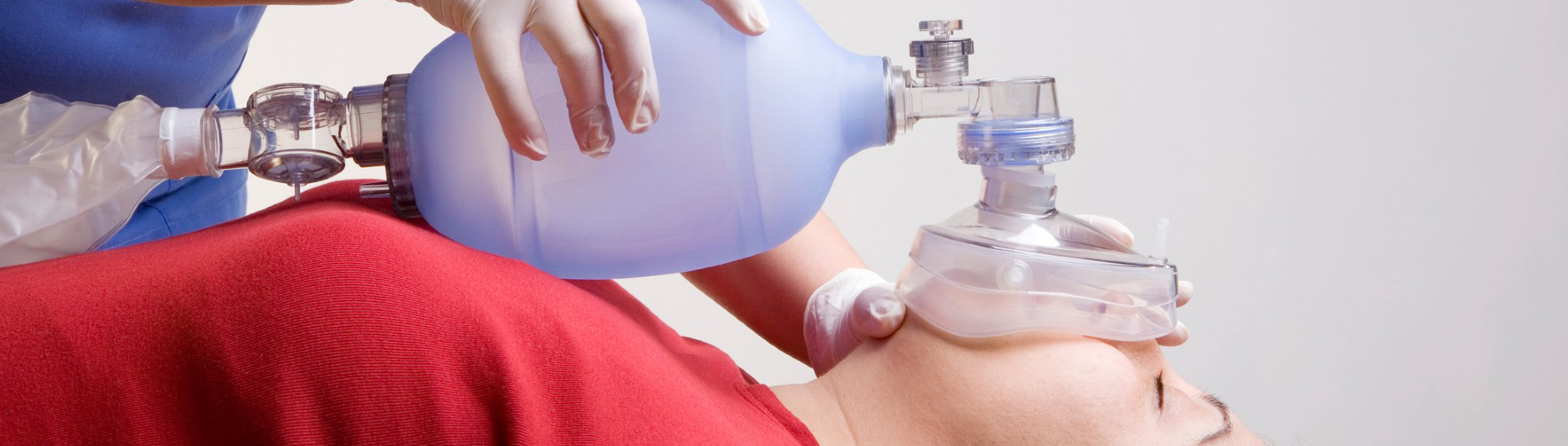

Imagina que un paciente se desploma frente a ti. Deja de respirar. ¿Sabrías qué hacer en los primeros 60 segundos? Tu primer paso: colocar al paciente en la posición adecuada y abrir las vías respiratorias. Esta sencilla acción ahorra un tiempo precioso.mascarilla con bolsa-válvula (BVM)Proporciona la respiración de rescate necesaria para mantener el flujo de oxígeno.
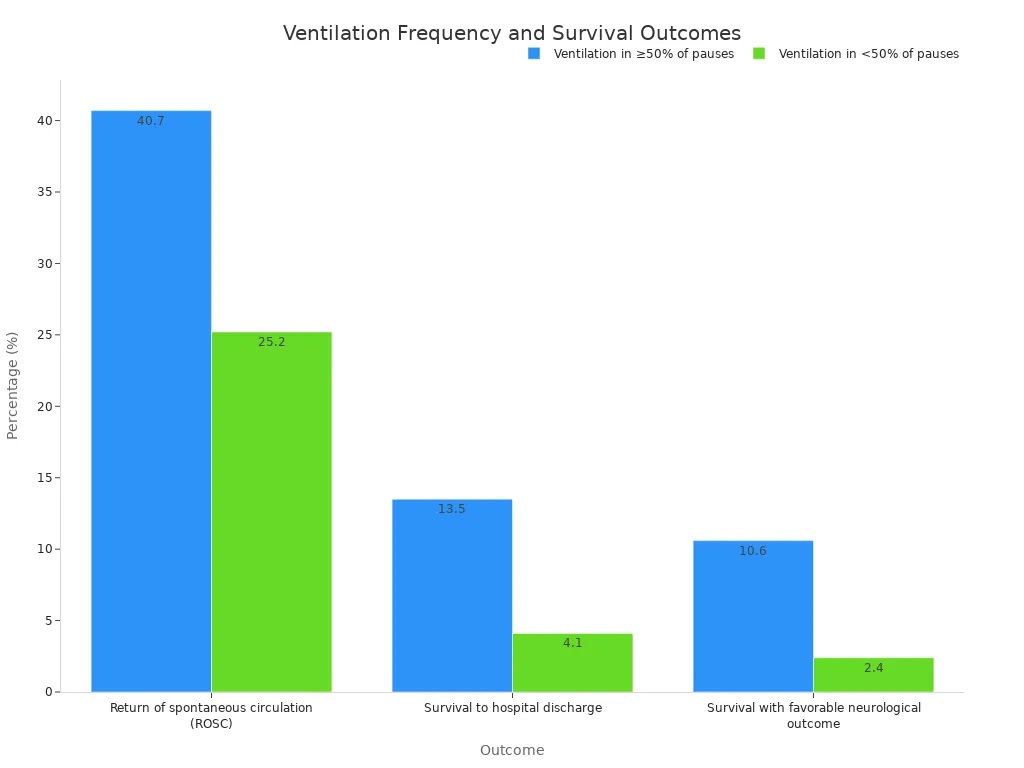
Los datos de estudios sobre paros cardíacos demuestran la importancia de este aspecto. Los pacientes que recibieron ventilación durante al menos la mitad de las pausas de RCP lograron una recuperación de la circulación espontánea (ROSC) prehospitalaria del 40,7 %, frente al 25,2 % de aquellos con ventilación menos frecuente. La supervivencia hasta el alta hospitalaria prácticamente se triplicó.
Dominar esta técnica de BVM es una habilidad fundamental para la atención de emergencias. Los pasos se ajustan a las pautas de reanimación estándar. Equipos de calidad, como las mascarillas con bolsa de válvula (BVM) deTianzuo MedicalGarantiza una ventilación eficaz. Tu formación en soporte vital básico sienta las bases para ello. La certificación en soporte vital básico enseña estos fundamentos. Todo socorrista debe practicar hasta que esto se convierta en un instinto.
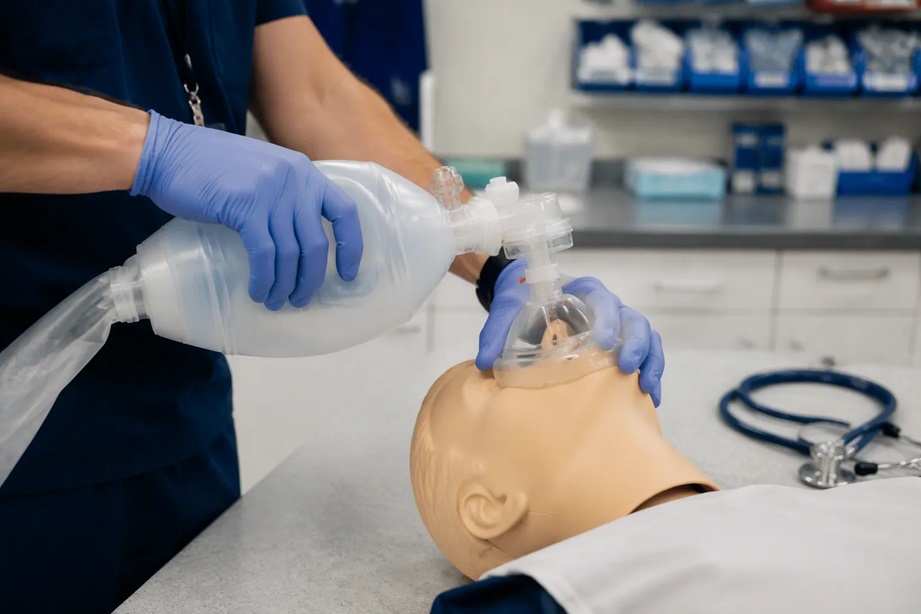
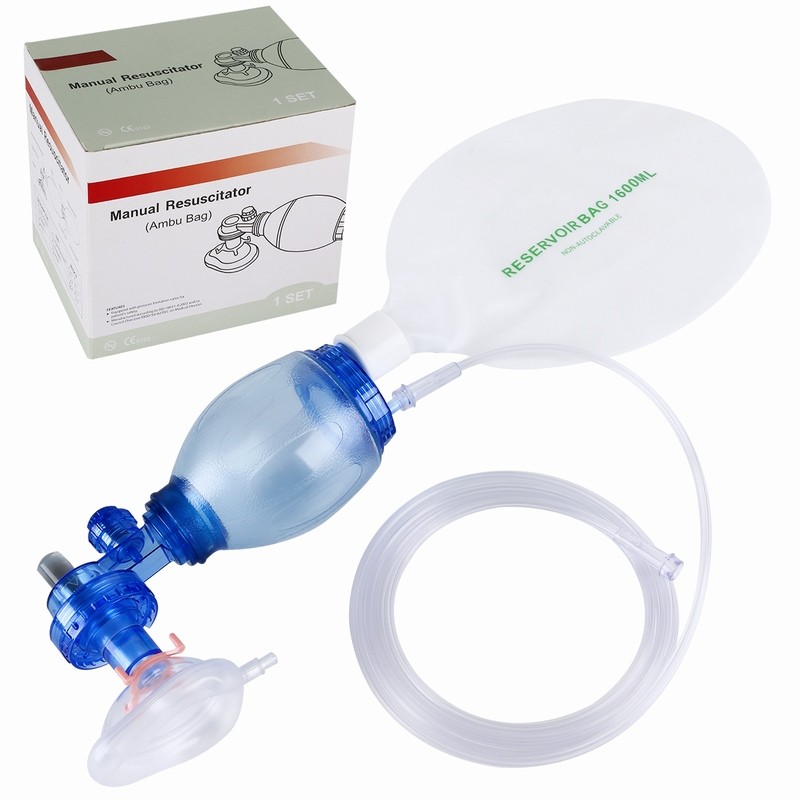
Una mascarilla con bolsa-válvula es unaresucitador manualEste dispositivo proporciona ventilación con presión positiva a pacientes que no pueden respirar adecuadamente por sí mismos. Se comprime la bolsa autoinflable para introducir aire u oxígeno en los pulmones del paciente y luego se suelta para permitir la exhalación. Este aparato sirve de puente entre el manejo básico de la vía aérea y las intervenciones avanzadas, lo que permite controlar cada respiración.
Comprender cada parte de la mascarilla con bolsa de válvula le ayuda a usarla de manera efectiva durante una emergencia.Cada componente desempeña un papel específico para proporcionar una ventilación segura.
|
Componente |
Función |
|---|---|
|
bolsa reservorio de oxígeno |
Almacena oxígeno para asegurar un suministro alto de FiO2; se llena cuando el oxígeno...El suministro es adecuado |
|
Entrada de oxígeno |
Se conecta a la fuente de oxígeno para proporcionar oxígeno suplementario. |
|
Válvula de admisión (válvulas de tres compuertas) |
Controla el flujo de gas: la membrana del disco de entrada evita el reflujo; la válvula de aleta del depósito de entrada permite la entrada de aire ambiente cuando el suministro de oxígeno es insuficiente; la válvula de aleta del depósito de salida libera el exceso de presión para evitar daños. |
|
Bolsa de ventilación |
Bolsa autoinflable que se comprime para entregarrespira; se retrae para llenarse de oxígeno o aire. |
|
Válvula del paciente |
Dirige el flujo inspiratorio hacia el paciente y el flujo espiratorio lejos para evitar la reinhalación; incluye puertos inspiratorios y espiratorios. |
|
Válvula de alivio de presión |
Previene la presión excesiva, especialmente en modelos pediátricos. |
|
Válvula PEEP |
Se conecta al puerto espiratorio para mantener una presión positiva al final de la espiración. |
La bolsa de ventilación se retrae automáticamente tras cada compresión, aspirando gas fresco. El sistema de válvula unidireccional garantiza que el aire exhalado salga sin mezclarse con el oxígeno que entra. Debe inspeccionar todos los componentes antes de usar el producto, especialmente las válvulas, ya que una válvula atascada puede comprometer todo el proceso de ventilación.
El resucitador manual con bolsa-válvula-mascarilla (BVM) se utiliza en diversas situaciones críticas. La insuficiencia respiratoria es la más frecuente, cuando la respiración del paciente es demasiado superficial o débil para mantener niveles adecuados de oxígeno. El paro cardíaco requiere ventilación inmediata con BVM durante la RCP, ya que las compresiones torácicas por sí solas no proporcionan el oxígeno que el cerebro necesita. Este dispositivo también se utiliza para la preoxigenación antes de la intubación, llenando los pulmones del paciente con oxígeno de alta concentración para crear un margen de seguridad durante el procedimiento.
Su formación en soporte vital básico (SVB) enfatiza el reconocimiento rápido de estas situaciones. La decisión de iniciar la ventilación con bolsa-válvula-mascarilla (BVM) debe tomarse en cuestión de segundos tras identificar una respiración inadecuada. Retrasar esta intervención reduce las posibilidades de supervivencia del paciente. En todos los casos, su objetivo sigue siendo el mismo: administrar oxígeno de forma eficaz mientras se prepara para el manejo definitivo de la vía aérea. La bolsa de reanimación cardiopulmonar (BAM) que sostiene representa un eslabón fundamental en la cadena de supervivencia, y el manejo de la vía aérea comienza con la correcta colocación y sellado de la mascarilla.
Antes de administrar la primera respiración, debe preparar su equipo y a su paciente. Esta fase del manejo de la vía aérea determina el éxito o el fracaso de la ventilación con bolsa-válvula-mascarilla (BVM). Una ventilación BVM eficaz requiere una preparación minuciosa.
Su primera tarea es seleccionar el tamaño correcto de la mascarilla. Las mascarillas para adultos, niños y bebés difieren en forma y volumen. Una mascarilla que no ajusta bien crea huecos y fugas. Inspeccione cada componente de la mascarilla con bolsa de válvula para detectar daños visibles. Apriete la bolsa y observe cómo se expande por completo. Esto confirma la integridad de la mascarilla con bolsa de válvula. Pruebe la válvula de alivio comprimiendo la bolsa y verificando que se abre y se cierra correctamente. Inspeccione la mascarilla para detectar grietas, desgarros o desgaste en el acolchado que puedan causar fugas. Un rendimiento constante depende de un sistema sin fugas.
Ensamble la bolsa autoinflable, la mascarilla del tamaño adecuado, el tubo de oxígeno y el depósito. Conecte el suministro de oxígeno y ajuste el flujo a 10–15 L/min. Asegure todas las conexiones firmemente. Un tubo de oxígeno suelto puede desconectarse durante el uso. Una precaución importante de almacenamiento es la siguiente: si un resucitador de bolsa-válvula-mascarilla (BVM) no está diseñado para ser plegable, almacenarlo comprimido durante períodos prolongados puede reducir la elasticidad de la bolsa. Esto compromete su eficacia durante una emergencia. Las válvulas de alivio de presión, comunes en los modelos pediátricos, evitan la sobrepresión pulmonar. Un clip de derivación permite la anulación manual cuando se requiere una presión más alta clínicamente. Su capacitación en soporte vital básico (SVB) debe incluir la inspección de estos detalles. Los buenos hábitos de SVB ahorran tiempo durante emergencias reales.
Coloque al paciente boca arriba sobre una superficie firme y plana. Esta posición facilita el acceso a la vía aérea. Abra la vía aérea utilizando las técnicas adecuadas de posicionamiento. En pacientes sin traumatismos, utilice la maniobra de inclinación de la cabeza y elevación del mentón. Incline la cabeza hacia atrás presionando la frente. Levante el mentón hacia adelante con las yemas de los dedos. Esta acción separa la lengua de la parte posterior de la garganta.
En pacientes con sospecha de lesión medular, utilice la maniobra de elevación mandibular. Coloque los dedos detrás del ángulo de la mandíbula y elévela hacia adelante sin inclinar la cabeza. Ambas técnicas utilizan las prominencias óseas como ventaja mecánica. Evite comprimir los tejidos blandos debajo de la lengua, ya que esto puede causar obstrucción.
Coloque la mascarilla correctamente. Coloque el extremo estrecho sobre el puente de la nariz. La mascarilla debe cubrir completamente la nariz y la boca, sin dejar huecos. Si el paciente es edéntulo, dejar las prótesis dentales puestas puede mejorar el sellado de la mascarilla. Los dispositivos nasofaríngeos y orofaríngeos ayudan a empujar la lengua y los tejidos blandos hacia adelante. Estos son especialmente útiles en pacientes inconscientes. Su técnica debe incluir la comprobación de la elevación del tórax con cada respiración. Esto confirma que su ventilación con bolsa-válvula-mascarilla (BVM) es eficaz. Las bolsas-válvula-mascarilla (BVM) de fabricantes fiables ofrecen un rendimiento constante.
Manejar una mascarilla con bolsa de reanimación en solitario supone un reto considerable. Debes controlar la vía aérea, sellar la mascarilla y comprimir la bolsa simultáneamente. Dominar esta técnica de reanimación en solitario sigue siendo una habilidad fundamental en soporte vital básico. Tu éxito depende de dos acciones cruciales: lograr un sellado hermético y administrar respiraciones con precisión.
The foundation of effective bvm ventilation is a perfect mask seal. Without it, air escapes, and your efforts fail. The E-C clamp technique provides the mechanical advantage you need for one-handed control. Form a "C" with your thumb and index finger. Place these digits on the top of the mask, applying gentle downward pressure over the bridge of the nose and the bony part of the chin. Your remaining three fingers form an "E." Hook these fingers under the angle of the patient's jaw, along the bony ridge.
Your primary action is to lift the jaw upward into the mask. Do not push the mask down onto the face. Pushing the mask down often distorts the seal and can occlude the airway. Lifting the jaw pulls the tongue and soft tissues forward, opening the airway naturally. This lift creates the space for air to flow. Proper mask placement is confirmed when the mask covers the nose and mouth completely, with the cushion forming a seal against the skin.
Common errors during this process directly compromise ventilation. You must recognize and avoid them.
|
Error |
Impact on Ventilation |
|---|---|
|
Applying pressure to soft tissues of the neck |
Can occlude the airway, impairing ventilation. |
|
Pushing the mask down instead of lifting the jaw |
Can occlude the airway, reducing airflow. |
|
Squeezing the bag too hard or too fast |
Causes stomach insufflation, aspiration risk, and decreased cardiac output, compromising effective ventilation. |
Your goal is a stable, leak-free connection. A high-quality Bag Valve Mask (BVM) with a pliable, conforming cushion makes this seal easier to achieve and maintain.
With a secure seal established, you now focus on the breath itself. Your left hand maintains the E-C clamp. Your right hand squeezes the self-inflating bag. Compress the bag smoothly and deliberately. Aim to deliver each breath over a full second. Watch for the patient's chest to rise. This visible rise is your immediate feedback for adequate tidal volume.
You must control the volume and rate. Squeeze only one-third to one-half of the bag's total volume for an adult. A full compression forces too much air too quickly. This leads to gastric insufflation, where air enters the stomach. A distended stomach increases the risk of vomiting and aspiration. It also pushes against the diaphragm, reducing lung capacity. After each breath, allow the bag to recoil fully before delivering the next. Full recoil ensures the bag refills with oxygen.
Control your ventilation rate. For a patient with a pulse but absent breathing, provide one breath every 5 to 6 seconds. This equals 10 to 12 breaths per minute. During cardiac arrest with ongoing CPR, you will follow the 30:2 compression-to-ventilation ratio. In either case, a slow, measured pace is critical. Rapid, forceful bag squeezes are dangerous. They can decrease cardiac output by raising intrathoracic pressure, which impedes blood return to the heart.
The limitations of the one-person method are important to understand.
One-rescuer BVM ventilation with minimal training fails to deliver adequate tidal volumes, while two-rescuer BVM ventilation delivers tidal volumes more than recommended and comparable to those seen with endotracheal intubation. Therefore, two-rescuer BVM is more effective for initial resuscitation.
This evidence highlights a key point. The single-rescuer technique is physically demanding. Fatigue can quickly degrade your mask seal and the quality of your squeezes. Your bls training prepares you to use this method when you are alone. You should always call for help to transition to a two-person technique as soon as possible. ReliableBag-Valve-Mask (BVM) Resuscitatorssupport consistent performance, but your technique dictates the outcome. Focus on a good seal, watch for chest rise, and deliver slow, steady breaths to provide safe, effective positive-pressure ventilation.
When you integrate bvm ventilation into CPR, your timing matters. The goal is to deliver oxygen without interrupting blood flow. Data from a multicenter study shows the impact of effective ventilation. Patients who received lung inflation in at least half of the chest compression pauses achieved 40.7% return of spontaneous circulation. Those with less frequent ventilation reached only 25.2%. Survival to hospital discharge nearly tripled, from 4.1% to 13.5%.
Your technique during CPR follows a specific sequence. Deliver one bvm breath over one second. Watch for the chest to rise visibly. Provide only enough air to achieve this rise. Avoid over-ventilating, as excessive pressure increases intrathoracic pressure and reduces blood return to the heart. If an advanced airway is in place, you switch to continuous compressions. Give one breath every six seconds, at a ventilation rate of 10 breaths per minute, without synchronizing with compressions. A Bag-Valve-Mask (BVM) Resuscitator connected to high-flow oxygen supports this rhythm. Your bls training emphasizes minimizing interruptions in chest compressions. Every pause reduces perfusion to the brain and heart. Consistent chest movement and end-tidal CO₂ monitoring confirm effective ventilation.
The 30:2 compression-to-ventilation ratio is the standard for adult CPR. You perform 30 chest compressions, then pause briefly to deliver 2 breaths. This cycle repeats without delay. Evidence from ILCOR guidelines supports this ratio over alternatives like 15:2.
|
Outcome |
30:2 vs 15:2 Effect Estimate |
|---|---|
|
Favorable neurological function |
RR 1.34 (95% CI 1.02–1.76) |
|
Survival |
RR 1.37 (95% CI 1.19–1.59) |
|
Return of spontaneous circulation |
RR 1.11 (95% CI 1.00–1.23) |
The 30:2 ratio prioritizes chest compressions. By limiting pauses to 2 breaths, you maintain blood flow while still providing ventilation. Each breath should last one second. Squeeze only one-third to one-half of the bag volume. This prevents gastric insufflation and maintains cardiac output. During cardiac arrest, a two-person bvm technique is far more effective. One rescuer holds the mask seal while the other squeezes the bag. This reduces fatigue and delivers more consistent tidal volumes. Your bls certification should include practice with both single-rescuer and two-person techniques. Mastering this ratio during CPR ensures you balance ventilation with circulation, giving the patient the best chancefor survival.
When a second rescuer arrives, you should transition immediately to the two-person approach. This method transforms your bvm from a challenging solo task into a coordinated team effort. The two-rescuer technique dramatically improves the quality of bvm ventilation and represents the standard of care in resuscitation scenarios. Your bls training should emphasize this transition as a priority once help arrives.
The two-rescuer technique assigns distinct responsibilities to each team member. Rescuer 1, the Airway Manager, positions at the patient's head. This rescuer uses both hands to secure the mask with a double E-C clamp technique. Your thumbs and index fingers form a "C" shape on the mask surface. Your middle, ring, and little fingers form an "E" along the jawline to lift the mandible upward. You hold the mask stable on the face, lifting the jaw toward the mask rather than pressing the mask down. This action creates a reliable seal without compressing soft tissues. You must reassess the seal after every breath to maintain effectiveness.
Rescuer 2, the Bag Handler, manages the ventilation bag. This rescuer delivers slow, controlled squeezes and stops when visible chest rise occurs. You watch the patient's chest carefully for adequate rise and check for air leaks around the mask. You avoid forceful breaths that cause gastric inflation. Your body mechanics matter: maintain a comfortable position without twisting or reaching awkwardly.
|
Rescuer |
Specific Duties |
|---|---|
|
Rescuer 1 (Airway Manager) |
Positions at the patient's head;uses double E-C clamp; holds mask stable; lifts jaw toward mask; reassesses seal after each breath |
|
Rescuer 2 (Bag Handler) |
Delivers slow, controlled squeezes; stops at visible chest rise; watches for leaks; avoids forceful breaths; maintains proper body mechanics |
The two-rescuer technique offers clear advantages over the single-rescuer method. You achieve a better mask seal because one person dedicates both hands to airway management. This eliminates the struggle of maintaining the E-C clamp while simultaneously squeezing the bag. The result is more consistent tidal volumes with each breath.
Rescuer fatigue decreases significantly. In the one-person method, your hands tire quickly, degrading the seal quality. With two rescuers, each person focuses on one task, sustaining high performance for longer periods. This matters during prolonged resuscitation efforts where quality degrades over time.
Coordination between rescuers follows a specific sequence:
Rescuer 1 performs 30 chest compressions, counting aloud to maintain rhythm.
Rescuer 2, positioned at the head, holds the bag-mask with a C-shaped grip using thumb and index finger to seal the mask, while remaining fingers lift the jaw to open the airway.
Rescuer 2 administers two breaths, each lasting one second, while observing chest rise.
Rescuers switch duties every two minutes, with the rescuer performing compressions calling out "switch."
Counting out loud helps both rescuers anticipate breaths and maintain the correct compression-to-ventilation ratio. This verbal coordination prevents missed breaths or delayed compressions. Your bls training should include practice with this switching protocol to build muscle memory.
The two-rescuer technique also reduces the risk of over-ventilation. With one person dedicated to watching chest rise, you can stop each squeeze precisely when the chest reaches full expansion. This prevents the gastric insufflation and decreased cardiac output associated with excessive pressure. Bag-Valve-Mask (BVM) Resuscitators with clear markings help the Bag Handler gauge appropriate squeeze volumes.
Evidence supports this approach strongly. One-rescuer bvm ventilation with minimal training fails to deliver adequate tidal volumes. Two-rescuer bvm ventilation delivers tidal volumes more than recommended and comparable to those seen with endotracheal intubation. Therefore, two-rescuer bvm ventilation is more effective for initial resuscitation. When a second rescuer is available, this method is always the recommended approach. Your Bag Valve Masks (BVM) equipment performs best when paired with proper two-person technique. Master this coordination through regular practice, and you will provide safer, more effective ventilation during critical emergencies.
You must confirm your bvm delivery is working. The most reliable indicator remains visible chest rise and fall. As one clinical educator warns, "If you do not see the patient's chest rise and fall, your seal is not tight or the airway is not open, and the patient is not receiving the life-saving oxygen they need." Monitor oxygen saturation. A rising SpO₂ reading confirms effective ventilation. Watch for heart rate normalization. In bradycardic patients, an improving heart rate signals adequate oxygenation. Check for improved skin color as circulation returns. Your bls training teaches you to reassess these signs of effective ventilation continuously. Do not assume your technique is correct without verifying these indicators.
Even trained professionals make mistakes. A study by Culbreth and Gardenhire (2021) inHeart & Lungfound that respiratory therapists frequently fail to meet recommended ventilation parameters, including tidal volume and rate. Underventilation often results from a poor mask seal. Overventilation occurs when you squeeze too hard or too fast. Both errors reduce the effectiveness of your bvm ventilation.
|
Pitfall |
Corrective Action |
|---|---|
|
Over-ventilation |
Deliver each breath overone second. Squeeze only one-third to one-half of the bag volume. |
|
Poor mask seal |
Use the E-C clamp technique. Lift the jaw into the mask. Grasp bone, not soft tissue. |
|
Incorrect head positioning |
Reapply the head tilt-chin lift or jaw thrust maneuver to open the airway. |
|
Failure to monitor |
Check chest rise, SpO₂, and heart rate after every breath cycle. |
Over-ventilation raises intrathoracic pressure and decreases cardiac output. Control your driving pressure. Use a gentle squeeze over the full one-second inspiratory time. Allow complete exhalation by following the three-second rule. This prevents gas trapping and maintains proper ventilation.
Poor mask seal is the most common cause of underventilation. If you grasp the soft tissue beneath the mandible, you push the tongue into the posterior pharynx and worsen obstruction. Pull the mandible into the mask rather than pushing the mask onto the face.
Optimize airflow with airway adjuncts. An oral or nasal airway creates a consistent pathway that promotes laminar flow and reduces turbulence. If ventilation remains inadequate, the tongue may be obstructing the airway. Insert an adjunct to displace the tongue forward.
Monitor bag compliance. If the bag feels stiff, lung compliance is low. If pressure builds quickly, resistance is high. Adapt your technique accordingly. For high-resistance conditions like asthma, extend exhalation times. For low-compliance conditions like CHF, consider applying PEEP. Your bag valve mask technique must adapt to the patient's physiology.
Your bls training provides the foundation. Regular practice on mannequins builds muscle memory. Reliable Bag-Valve-Mask (BVM) Resuscitators support consistent performance, but your technique determines the outcome.
Mastering the bag valve mask requires more than reading. You must practice each step until it becomes instinct. Prepare your equipment. Position the patient. Seal the mask with the E-C clamp technique. Ventilate slowly and monitor the chest rise. A good seal forms the foundation of effective bvm ventilation. Over-ventilation causes harm. Remember the goal: slow and steady breaths. Your ambu bag skills need regular practice on mannequins. This builds muscle memory for real emergencies. Enroll in bls or ACLS training. These courses provide hands-on training with professional instructors. Keep your ambu device ready for immediate use. Reliable equipment like Bag-Valve-Mask (BVM) Resuscitators supports your cpr efforts. Your bls certification prepares you for this critical intervention.
Watch the patient's chest. Each breath should take one full second. If you deliver more than 10-12 breaths per minute for a patient with a pulse, you're going too fast. Rapid ventilation causes stomach inflation and reduces blood flow to the heart.
Stop ventilation immediately. Turn the patient's head to the side. Clear the airway with suction or a finger sweep. Reposition the head and resume bvm ventilation. Check that the mask seal remains intact before continuing. This prevents aspiration into the lungs.
No. Pediatric patients require smaller mask sizes and lower bag volumes. Use a pediatric-specific Bag-Valve-Mask (BVM) Resuscitator with a pressure relief valve. Deliver breaths gently, watching for subtle chest rise. Over-ventilation harms children faster than adults due to their smaller lung capacity.
Assign one rescuer to hold the mask seal during transport. That person focuses only on maintaining the E-C clamp position. Another rescuer squeezes the bag. This division of roles keeps the seal stable while the stretcher moves. Practice this coordination during your bls training.
Una mascarilla de bolsillo utiliza el aire exhalado, suministrando aproximadamente un 16 % de oxígeno. Una mascarilla con bolsa de reanimación se conecta a una fuente de oxígeno, suministrando hasta un 100 % de oxígeno. Las mascarillas con bolsa de reanimación (BVM) también proporcionan un mejor control del volumen corriente y reducen la fatiga del reanimador durante los esfuerzos de reanimación prolongados.

 Compatible con red IPv6


 español
 English
 فارسی
فارسی français
 Deutsch
 русский
 italiano
 português
 العربية
 Türkçe